Local Restaurants Are Being Squeezed. Direct Channels Are the Way Out.
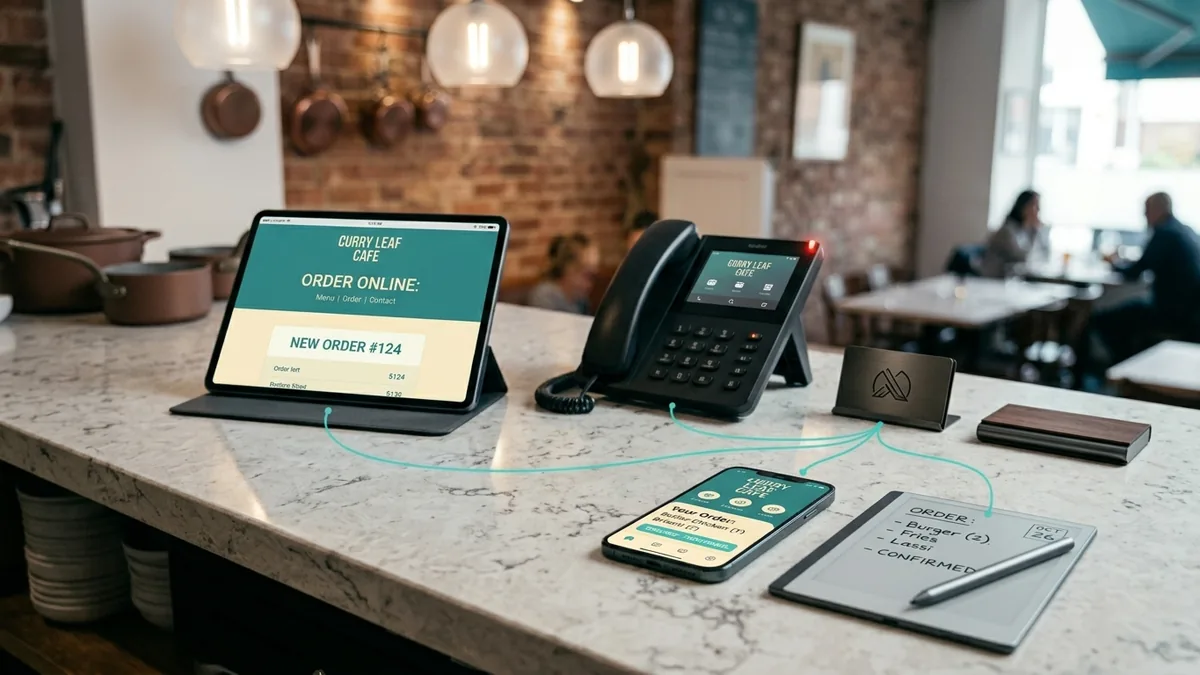
A four-table family-run pizzeria in Queens. A twelve-table South Indian dosa place in Edison, NJ. A two-location Mexican grill in Phoenix. Different cuisines, different cities, same business model: they live and die on local regulars. The same family of four who comes every Friday. The office team that orders 20 lunches every Wednesday. The neighbor who texts "the usual?" twice a week. These are the customers who keep the kitchen alive.
Marketplaces don't bring those customers in. They take a cut of orders the restaurant would have gotten anyway.
The squeeze
Independent restaurants in 2026 face a margin problem they didn't create. DoorDash, Grubhub, and Uber Eats charge 15–30% commission on every order they bring in. For a restaurant doing $1.5M in annual revenue with even 25% of orders coming through marketplaces, that's roughly $50,000–$110,000 a year going out the door — not to ingredients, not to staff, not to the owner, but to a tech stack the restaurant doesn't own.
Then there's the second problem: the customer who placed that order isn't yours. They belong to the marketplace. The marketplace knows their address, their order history, their preferences. The restaurant gets a check.
Restaurant industry net margins average 3–9% in normal years. A 15–30% commission on a meaningful slice of revenue isn't a tax — it's the entire margin and then some. Restaurants that lean too heavily on marketplaces find themselves running their kitchens for someone else's customer database.
What "direct channels" actually look like at an independent
Walk into a local independent restaurant and ask the owner how their direct ordering works. The picture, in order of how often it shows up:
- Phone: most calls handled by whoever's not slammed at that moment. During the dinner rush, calls go unanswered. Owners know they're losing orders but don't have a way to staff the phone differently.
- Basic website: many have one (often built years ago) with a "Call to Order" link. Some have basic online ordering, but it's clunky, separate from the POS, and rarely updated. Maintaining it is no one's job.
- Mobile app: almost nobody has one. The cost and ongoing maintenance of building a custom app put it out of reach. Their customers download DoorDash instead.
- WhatsApp / text / Instagram DMs: a surprisingly common direct channel — especially for cuisine-specific local restaurants serving regulars. The owner replies manually when they have a free hand. Orders get lost in scroll.
- Walk-in / call-and-pickup: 30–50% of orders for many neighborhood places. Customers call ahead, walk in, wait at the counter, leave with a bag.
Across all of these, two things are missing that marketplaces have:
- A unified order flow. Each channel has its own process. The kitchen sees phone orders one way, walk-ins another, WhatsApp orders a third. Mistakes follow.
- A customer database with loyalty. No way to identify a regular, recall their preferences, or reward them for coming back. Marketplaces do all three by default. Independents have a notebook by the register, if anything.
The customers who walk in every week — the ones the restaurant exists for — get nothing different than a stranger who found the place on Google. Marketplaces, paradoxically, do a better job recognizing your loyal customers than you do.
Why building your own isn't realistic for most independents
The natural answer — "build your own ordering system" — collapses on contact with reality. To replicate what marketplaces do for direct ordering, an independent would need:
- A voice agent or full-time phone staff to never miss a call
- Web ordering integrated with the POS
- Native mobile apps for iOS + Android
- A customer database, loyalty program, and SMS marketing
- Menu sync across all of the above
Each of those is a 6-to-12-month build for a tech team an independent doesn't have. Hiring a developer is a $100K+ annual cost before the first feature ships. The realistic alternative until recently has been "stay on marketplaces and absorb the commission" — even though the math doesn't work long-term.
What BiteBot fits in
BiteBot exists for this exact gap. The idea: give a local restaurant the same direct-ordering capability that marketplaces have — without the marketplace cut, without a tech team.
What's included on day one:
- AI voice agent on your existing phone line. No staffing. No missed calls. The agent answers in your restaurant's name, knows your menu (regional dish names, spice levels, dietary tags, custom modifiers), and pushes orders straight to your POS. 24/7.
- Web ordering on your own domain. Customers order from your site instead of the marketplace's. Same menu, same prices, same kitchen ticket queue.
- A branded mobile app for your customers. Your name, your logo. The kind of app a startup would spend a year building, provisioned for you in days.
- Customer database with loyalty. Every order through every direct channel — phone, web, app — builds the customer profile. The regulars get recognized ("Welcome back — same as last time?"). Run point-based or visit-based loyalty. Send SMS campaigns. The data is yours, not a marketplace's.
- Zero per-order commission. BiteBot is a flat monthly subscription plus per-minute usage on AI voice calls. Whatever you save on marketplace commission is real margin you keep.
The math works again. A local restaurant doing $1.5M revenue, moving 30% of marketplace volume to direct ordering on BiteBot, recovers roughly $50K–$110K/year. Often that's the difference between hiring an extra line cook and not, or between staying open and closing.
"Local independent" doesn't have to mean "stuck with marketplaces"
The popular narrative for the last decade has been: marketplaces are how independents compete with chains. That equation is shifting.
Marketplaces are now where chains and well-funded virtual brands compete with independents — they have the operational scale to make the marketplace economics work, and an independent doesn't. For a local restaurant, the path forward isn't a bigger marketplace presence. It's a stronger direct channel.
What that looks like:
- Phone calls always answered
- Web orders going to your own site, not someone else's
- Your own branded app instead of customers downloading DoorDash
- A loyalty program that finally recognizes the customer who comes every Friday
- Zero commission on every direct order
That's the equation BiteBot is designed for. Independents don't need to build it — they need it to exist, and now it does.
How to start
Connect your POS, upload your menu, provision a phone number — most local restaurants are taking calls inside an hour. There's no IT project, no consultant, no rip-and-replace.
Try the ROI calculator with your numbers — missed calls per day, average ticket, days open per month. The recoverable revenue is usually a bigger number than owners expect.
Or start a free trial and see what the unified direct channels look like for your restaurant specifically. The first call your AI agent answers will tell you whether the math is on your side. (It usually is.)
For the broader case for direct ordering vs. marketplaces, see Why BiteBot — the positioning page covers the stack diagram, the comparison vs POS voice add-ons, and the cuisine-specific tuning that makes voice agents actually work for real menus.