AI Phone Ordering for Restaurants: How Voice AI Captures Every Call
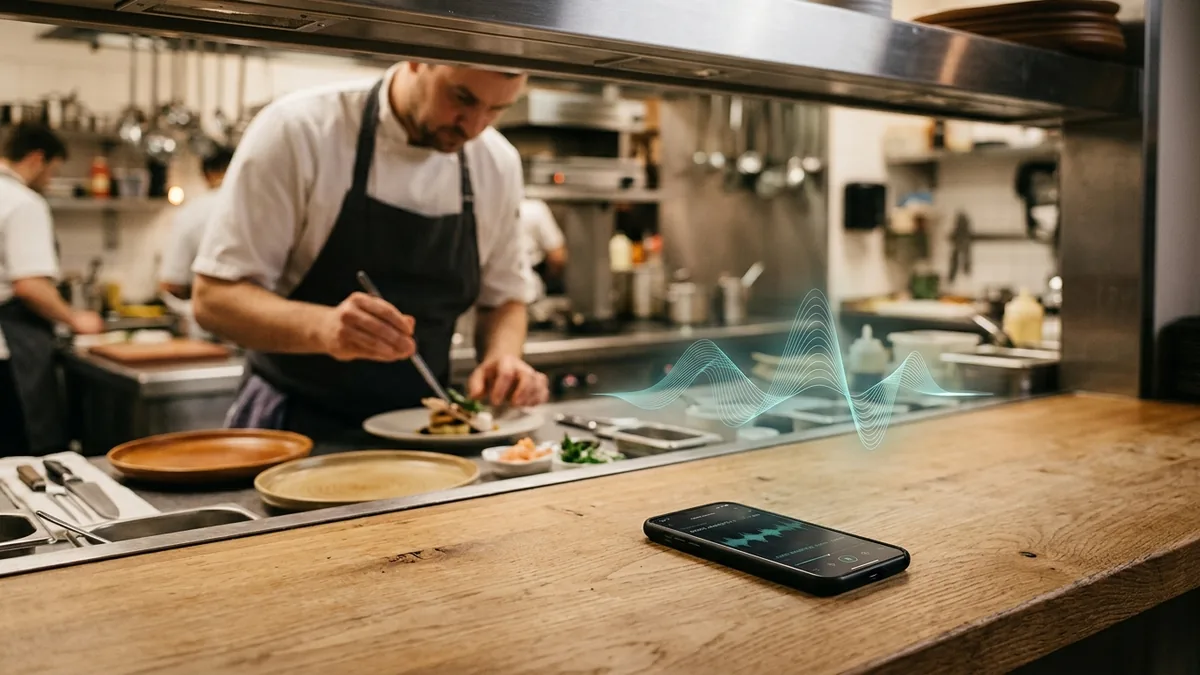
If you've ever stood in a restaurant kitchen during the Friday dinner rush, you know the sound: a phone ringing somewhere on the line, ringing again, going to voicemail. Every one of those rings is a customer trying to place an order — and the math on how many of them actually wait, hang up, or never call back is uncomfortable.
A typical full-service restaurant misses 20–40% of inbound calls during peak hours. For a restaurant doing $2M/year, that's anywhere from $80K to $300K in lost revenue every year. Not from bad food, not from bad reviews — purely from a phone that nobody could pick up in time.
The fix isn't another headset or a junior staffer chained to the host stand. It's a voice AI agent that answers every call, the same way every time, and sends the order straight to the kitchen.
What is voice AI for restaurants?
Voice AI is software that answers a phone call, holds a conversation with the caller in natural language, and acts on what they say. For restaurants specifically, that means:
- Greeting the caller in your restaurant's name and tone
- Taking the order including item names, modifiers (spice level, sides, no-onion), quantities, and special instructions
- Confirming details like pickup time, payment method, and customer name
- Sending the order to your POS, kitchen printer, or order display system
- Answering questions about hours, location, menu items, and dietary info
The customer hangs up the phone with the same outcome they'd get from talking to a host, except the AI doesn't go on break, doesn't get flustered when 12 calls hit at once, and doesn't ask "wait, was that medium spice or mild?" three times.
What changed in the last two years
Voice AI for restaurants used to mean clunky touch-tone IVR ("Press 1 to hear our hours, press 2 to leave a voicemail"). That's not what we're talking about.
Modern voice agents combine three pieces of technology that have all gotten dramatically better since 2023:
- Speech-to-text that works across accents, background noise, and the half-mumbled way most of us order food.
- Large language models that understand intent — distinguishing "no cheese" from "extra cheese" from "cheese on the side" without a human ever scripting those branches.
- Speech synthesis that sounds natural enough that callers don't realize they're talking to software (or do realize, and don't care, because the order goes through).
Stitch those together and you get an agent that can handle a full ordering conversation end-to-end. The same technology that powers the consumer voice assistants on your phone now runs in the background of restaurant phone lines.
What restaurants get when they turn it on
Three things change immediately when a restaurant deploys a voice AI agent:
1. No more missed calls
Every call gets answered on the first ring. There's no hold queue, no voicemail purgatory, no "we'll call you back" promises. During the lunch rush a single voice agent can handle dozens of simultaneous calls — something a human host literally cannot do.
For most restaurants this is the biggest line-item win. Recovered orders from previously-missed calls usually pay for the entire system within the first month.
2. Order accuracy goes up, not down
This is the surprising part. Restaurant operators often assume that AI will make more mistakes than a human — it's a phone, with bad audio, in a noisy kitchen environment. In practice the opposite is true:
- The AI doesn't mishear "lamb biryani" as "lamb birra" because it has the menu loaded as a vocabulary
- The AI confirms every item back before ending the call
- The AI writes the order directly to the POS — no handoff between scribbled paper, oral relay, and POS entry where errors sneak in
Restaurants we work with see kitchen "remake" rates drop by 30–60% in the first month. The compounding savings on wasted food, comp meals, and customer complaints add up fast.
3. Staff get to do their actual jobs
The hostess who used to spend 30% of her shift on the phone is now seating tables, expediting takeout, and handling walk-ins. The line cook who used to crane to hear orders being read aloud is just cooking. The phone stops being a bottleneck for everything else.
Owners often report this as the unexpected benefit — they bought voice AI to capture more revenue, and it ended up improving every other operation in the front-of-house.
What to look for in a voice AI system
Not all voice AI for restaurants is built the same. A few non-obvious things matter when you're evaluating:
POS integration depth. Some systems "send the order" by emailing a PDF to the host stand. That's not integration — that's voicemail with extra steps. Real integration writes the order into Square, Toast, Clover, or whichever POS you run, just like a human typing it in. Look for native connectors, not screen-scraping.
Multi-cuisine and modifier support. A pizza shop has 200 modifiers (size, crust, sauce, 50 toppings). An Indian restaurant has 30 spice-level rules. A sushi spot has substitutions and allergens. The voice agent has to know your menu's specifics — the model that handles "extra pepperoni" needs to also handle "medium spice on the chicken tikka, mild on the kids' butter chicken."
Outage behavior. The agent will eventually fail or be unable to handle a request. What happens then? The good systems forward to a human operator (yours, or a fallback service) or take a callback number. The bad systems just hang up. Ask about the failure modes before you sign anything.
Brand voice control. Your AI agent is talking to your customers in your restaurant's voice. You should be able to set the greeting, the tone, the closing line. If the system sounds like every other generic call-center bot, customers will notice and it'll feel cheap.
How BiteBot does it
BiteBot is voice AI built specifically for restaurants. The short version of how it works:
- You sign up and configure your menu. We import items, prices, modifiers, and dietary tags from your POS or a CSV.
- We assign you a phone number (or port your existing one). Calls to that number reach our voice agent.
- The agent answers every call with your restaurant's greeting, takes orders, confirms details, and sends them straight to your POS — Square, Clover, Toast, and others supported natively.
- You see every call in your dashboard — recordings, transcripts, accuracy audits, sentiment analysis on every conversation, and full order history.
- You stay in control. Bot status (online/sleep), prep time, greeting, fallback number, and operating hours are all owner-controlled and changeable in real time.
Specifics that matter:
- Multi-cuisine support — we work with pizzerias, Indian, Chinese, Thai, Mexican, sushi, BBQ, breakfast spots, and more. The model adapts to your menu's specific modifier vocabulary.
- Real-time POS sync — orders land in your existing system, including the modifiers, special instructions, and customer info.
- Order accuracy auditing — every call is automatically checked against the transcript so you can see when the AI got something wrong (and we can fix it).
- Loyalty integration — caller's phone number ties to their loyalty profile automatically; they earn points just like web/app orders.
- Fallback number — if the AI ever can't handle a request, it forwards to a number you control. No dropped customers.
We also run on web (order.bitebot.ai/<your-slug>) and native iOS / Android apps for restaurants that want to capture orders across all channels — voice, web, and app — into the same dashboard.
When does this make sense?
Voice AI is most obviously a fit for restaurants where:
- Phone orders are 15%+ of revenue — anything below that and the ROI takes longer
- Peak-hour call volume exceeds what one staffer can handle — usually 3+ calls/min during rush
- Order complexity is moderate to high — pizza shops, Indian, sushi all benefit; simple drive-thru with 5 items doesn't really need it
It's a less clear fit if you're a 6-table fine-dining spot with 4 reservations a night and zero takeout. The economics work best when the phone is a real volume channel.
Getting started
If you want to see what voice AI sounds like before you commit, we offer a free pilot — we'll set up a demo line for your restaurant's menu, you can call in, place real orders, and see them flow into a sandboxed dashboard. No POS connection needed for the demo. You decide from there.
The phone has been the single most under-automated channel in restaurants for two decades. That's finally changing — and it's not a future-tense change. It's working today, in restaurants like yours, capturing orders that would otherwise have gone to your competitor across the street.
The only real question is how many more Friday-night rings you want to miss before flipping the switch.